Why DeepSeek OCR 2 Matters for Creators#
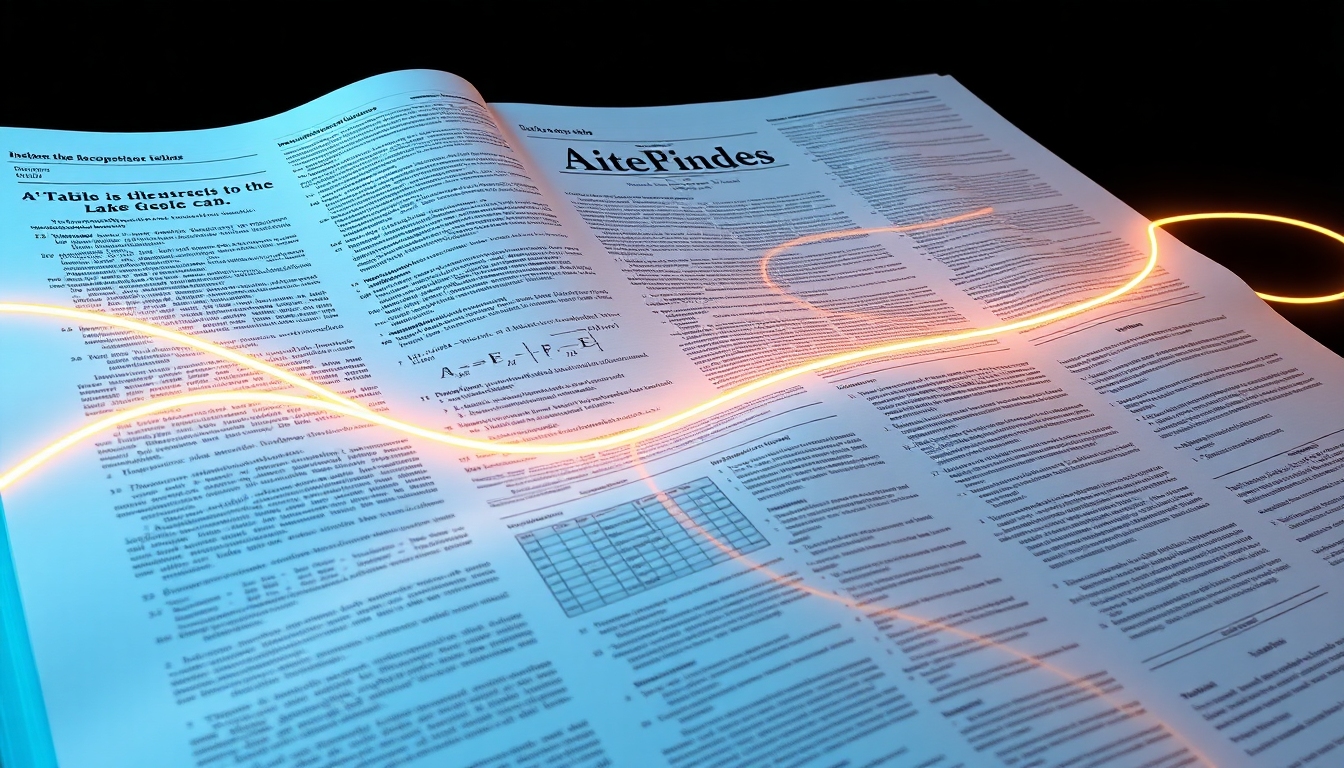
If you’ve ever wrestled with scanned PDFs, multi-column articles, or messy invoices, you know how rigid traditional OCR can be. It skims left-to-right, top-to-bottom, flattening rich layouts into brittle text. DeepSeek OCR 2 changes that paradigm. Instead of forcing a one-size-fits-all reading order, DeepSeek OCR 2 learns to read like a human—following a semantic path that respects columns, tables, figures, captions, formulas, and the logic behind them.
For content creators—video producers, designers, writers, podcasters, voice actors—DeepSeek OCR 2 means fewer fixes, faster turnaround, and more faithful conversions. It’s not just recognizing characters; it’s understanding context. And that’s a big deal for creative workflows that depend on precision.
What’s New: The DeepEncoder V2 and Visual Causal Flow#
At the heart of DeepSeek OCR 2 is the upgraded DeepEncoder V2, which introduces visual causal flow. Rather than treating a page as a fixed grid of patches, the encoder processes the image step by step, where each step depends on what it has already “seen.” That mirrors how people skim headlines, scan columns, check figure captions, and then dive deeper.
This visual causal flow lets DeepSeek OCR 2:
- Infer a semantic reading order across complex layouts.
- Maintain logical grouping of elements (table cells, math blocks, sidebars).
- Resolve ambiguous regions by using the context built in prior steps.
The net effect is cleaner output, fewer formatting errors, and a more faithful narrative of the page—exactly what creators need when turning source material into scripts, subtitles, design assets, or data.
The Architecture at a Glance#
DeepSeek OCR 2 follows a clean pipeline:
- Image → DeepEncoder V2 → 3B MoE LLM Decoder → Text
Key components:
- DeepEncoder V2: A dual-vision transformer stack that blends structure-sensitive features and text-aware semantics. One branch aligns with segmentation-derived structure (SAM-style signal), while the other aligns with text-grounded vision (CLIP-style signal). This hybrid provides robust layout understanding and stable recognition.
- 3B MoE LLM Decoder: A compact mixture-of-experts language model (roughly 3 billion parameters) that’s efficient yet expressive. Notably, DeepSeek OCR 2’s performance gains come primarily from the encoder; the decoder remains lightweight and reliable.
This matters because DeepSeek OCR 2 doesn’t brute-force recognition. It compresses vision into a meaning-rich representation the decoder can navigate efficiently.
How Visual Causal Flow Mimics Human Reading#
Traditional OCR scans line-by-line and flattens 2D page geometry into 1D sequences. DeepSeek OCR 2 flips that. With visual causal flow, the system:
- Identifies prominent anchors (titles, headers, key panels).
- Charts a semantic route through columns, tables, and figures.
- Revisits regions when needed, incorporating prior context to disambiguate.
- Outputs a coherent, human-like reading order that preserves relationships between text and layout.
For creators, this means DeepSeek OCR 2 is less likely to mix column text, scramble table cells, or sever figure captions from their images. Outputs are cleaner, faster to edit, and more faithful to intent.
The Numbers: Speed, Compression, and Benchmarks#
DeepSeek OCR 2 backs its design with measurable gains:
- OmniDocBench v1.5: Scores around 91.09%, reflecting a 3.7% jump over the previous version—evidence that DeepSeek OCR 2 materially improves layout understanding and text fidelity.
- Extreme compression: The encoder can compress a full page to as few as 64 tokens while preserving meaning-rich features. This token efficiency boosts throughput and reduces compute costs.
- Throughput at scale: With that compression, DeepSeek OCR 2 can process 200,000+ pages per day on a single GPU class machine in practical configurations, making it suitable for studios and teams with large archives.
- Lightweight decoder: The 3B MoE LLM keeps latency low and helps DeepSeek OCR 2 deliver responsive, budget-conscious performance.
Key Advantages of DeepSeek OCR 2 for Creative Workflows#
DeepSeek OCR 2 brings tangible benefits across the content lifecycle:
- Human-like reading order: Complex magazines, newspapers, research papers, and multi-column layouts are handled gracefully by DeepSeek OCR 2.
- Strong table and formula handling: DeepSeek OCR 2 understands tables, spreadsheets, and math blocks without melting them into unreadable lines.
- Robust on messy inputs: Low-resolution scans, noisy camera captures, and faint text are more forgiving with DeepSeek OCR 2.
- Structured outputs on demand: DeepSeek OCR 2 can produce Markdown for blogs, LaTeX for papers, or JSON for data workflows—reducing editing time.
- Scales with your archive: From a handful of PDFs to massive repositories, DeepSeek OCR 2 keeps pace thanks to its compression and throughput.
- Creator-friendly footprint: With a compact decoder and efficient encoder, DeepSeek OCR 2 can be deployed cost-effectively.
Real-World Use Cases for Content Creators#
- Video creators: Convert research papers and scripts reliably with DeepSeek OCR 2, preserving headings, lists, and references for quick narration.
- Designers: Extract text from layouts, posters, and brochures using DeepSeek OCR 2 while keeping typographic structure intact for redesigns.
- Writers and editors: Turn scanned books and articles into clean Markdown through DeepSeek OCR 2, ready for editing and CMS import.
- Voice actors and podcasters: Generate accurate, punctuated scripts from PDFs with DeepSeek OCR 2, minimizing prep time and retakes.
- Data journalists: Parse tables from reports and spreadsheets using DeepSeek OCR 2 to get structured JSON you can analyze immediately.
- Localization teams: With DeepSeek OCR 2 preserving semantic order, translation flows are cleaner, reducing context loss and rework.
Output You Can Use: Markdown, LaTeX, JSON#
DeepSeek OCR 2 is not just an OCR—it’s a structured document understanding engine. Whether you’re:
- Publishing a blog post: Ask DeepSeek OCR 2 for Markdown with headings, lists, and code blocks.
- Typesetting a paper: Request LaTeX with equations and labels from DeepSeek OCR 2.
- Automating pipelines: Get JSON with fields like title, sections, tables, and figures from DeepSeek OCR 2.
Because the model maintains a logical reading order, you receive outputs that slot neatly into downstream tools—without wrestling layout chaos.
Handling Tough Inputs: Low-Res, Noisy, and Skewed#
Creative teams don’t always control source quality. DeepSeek OCR 2 is trained to be resilient when:
- Pages are photographed at angles or slightly skewed.
- Scans include noise, stains, or compression artifacts.
- Fonts vary wildly across posters or historical documents.
By leaning on visual causal flow and dual-vision signals, DeepSeek OCR 2 builds context before committing to text—so it guesses less and gets more right on the first pass.
Workflow Recipes for Different Creators#
- YouTube producers: Use DeepSeek OCR 2 to extract scripts from research PDFs, output Markdown, then feed it to your teleprompter or TTS engine.
- Designers: Run DeepSeek OCR 2 on poster batches to get text layers, then reflow in your design tool with accurate hierarchy.
- Writers: Build a reading list pipeline—DeepSeek OCR 2 to Markdown → notes app → editorial workflow—so you never rewrite structure by hand.
- Voice actors: Convert scanned scripts via DeepSeek OCR 2 to clean text with stage directions preserved, then mark cues in your DAW.
- Agencies: Aggregate multi-client invoices using DeepSeek OCR 2 to JSON, normalize fields, and push into your accounting system.
Practical Performance and Cost Considerations#
Token compression is the sleeper feature that makes DeepSeek OCR 2 practical at scale. By reducing a page to as few as 64 tokens, DeepSeek OCR 2 cuts inference costs and latency without sacrificing accuracy. The lightweight 3B MoE decoder further keeps compute demands in check.
For teams on a budget, this means you can:
- Run larger backlogs through DeepSeek OCR 2 without massive infrastructure.
- Achieve 200k+ pages/day on a single GPU-class server with DeepSeek OCR 2 in efficient configurations.
- Keep per-page costs predictable across large campaigns powered by DeepSeek OCR 2.
Limitations to Keep in Mind#
While DeepSeek OCR 2 is robust, no model is perfect:
- Extremely degraded scans may still require preprocessing before DeepSeek OCR 2.
- Exotic fonts or stylized text can challenge any OCR, including DeepSeek OCR 2.
- Document graphs with non-linear reading sequences (e.g., comics with arbitrary panel orders) may require custom prompts for DeepSeek OCR 2.
That said, the model’s visual causal flow and semantic ordering make DeepSeek OCR 2 far more adaptable than line-by-line systems.
Why DeepSeek OCR 2 Is a Leap, Not a Step#
Most OCR upgrades chase accuracy with bigger decoders. DeepSeek OCR 2 breaks the pattern: it makes the encoder smarter. By teaching the model how to read (not only what to read), DeepSeek OCR 2 respects the narrative embedded in layouts. The result is better structure, cleaner output, and fewer manual fixes—especially for creators juggling complex sources.
If your work depends on keeping relationships intact—captions with images, headings with sections, cells with tables—DeepSeek OCR 2 feels less like OCR and more like a document ally.
Quick Checklist: When to Choose DeepSeek OCR 2#
- Multi-column documents? Choose DeepSeek OCR 2.
- Reports packed with tables and charts? Choose DeepSeek OCR 2.
- Academic PDFs with formulas? Choose DeepSeek OCR 2.
- Noisy scans from mobile cameras? Choose DeepSeek OCR 2.
- Need Markdown/LaTeX/JSON with minimal cleanup? Choose DeepSeek OCR 2.
- Scaling to hundreds of thousands of pages? Choose DeepSeek OCR 2.
Final Thoughts#
For creators, time saved is creativity earned. DeepSeek OCR 2 gives you both—fewer edits, smarter structure, and industrial-grade throughput. Between its DeepEncoder V2 with visual causal flow, dual-vision signals, compact 3B MoE decoder, and structured outputs, DeepSeek OCR 2 turns unruly documents into ready-to-use assets. If you’ve been waiting for OCR that actually reads like you do, DeepSeek OCR 2 is the upgrade to build your workflow around.